

As the world becomes more eco-conscious, the corporate world is evolving too. Today’s businesses are expected to be environmentally responsible, not just in their operations, but in how they design their workspaces. Sustainable workspaces aren’t just a trend; they represent the future of corporate design. Here’s why making your office space more sustainable is not just good for the planet, but also good for business.
Significance of Sustainability in Contemporary Workspaces
In contemporary workplaces, sustainability is becoming of greater importance due to:
- Improving the well-being of employees
- Enhancing brand reputation
- Cutting long-term operational costs
- Meeting governmental and compliant policies
Becoming sustainable is not a choice anymore but a necessity for companies that want to remain competitive and responsible. Sustainability in workspaces not only supports a greener planet but also creates healthier, more productive, and profitable environments for all.
Key Considerations in Creating Sustainable Workplaces
Focusing on one area of sustainability will create fully sustainable workspaces. Given below are the key strategies that workplaces should adopt:
1. Energy Efficiency
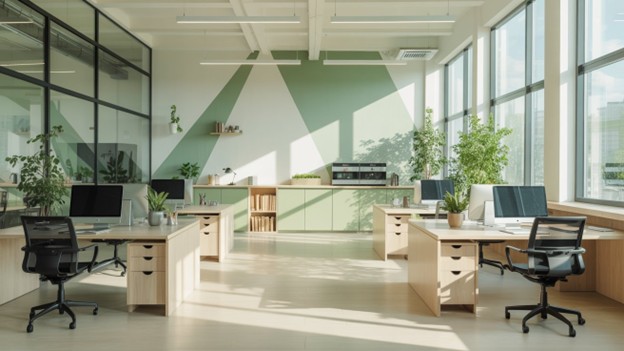
Significantly reducing a workspace’s carbon footprint can be accomplished through minimizing energy consumption.
Best Practices:
- Implement zoning for energy-efficient HVAC systems
- Use energy-efficient lighting equipped with motion sensors
- Purchase appliances with Energy Star ratings
- Design workspaces to maximize natural daylight
- Reduce reliance on artificial lighting
Read more: Energy-Efficient Lighting Solutions for Modern Offices
2. Sustainable Materials
Sustainability can be placed at the forefront by utilizing eco-friendly materials.
Sustainable Material Options:
- Reclaimed and recycled wood and metals
- Bamboo and natural fiber carpets
- Low VOC paints and adhesives
- Construction materials sourced from local vendors
3. Quality of Indoor Air
Fresh air with good ambient quality improves productivity and supports overall health, which is why indoor air quality should be considered a critical focus in sustainable office design.
Conditions That Enhance the Air Quality:
- Use of non-toxic, non-hazardous paints, sealants, and finishes
Integration of biophilic design elements (plants and vegetation) - Properly designed ventilation systems
- Installation of indoor pollutant monitors and air purifiers
4. Water Conservation
Water is the most important resource in the design of living spaces, bearing in mind that its availability is limited and often in drought-prone regions.
Conservation Tips:
- Install low-flow taps, toilets, and urinals
- Use drought-resistant landscaping
- Harvest rainwater for irrigation
- Detect and repair leaks promptly
5. Waste Reduction
Thoughtful design decisions can assist companies in reducing the amount of waste created both in the process of building their units and in the course of work.
Waste Reduction:
- Use modular furniture to reduce frequent replacements
- Implement an office recycling and composting program
- Go paperless with digital workflows
- Donate or recycle outdated electronics and furniture
6. Sustainable Furniture
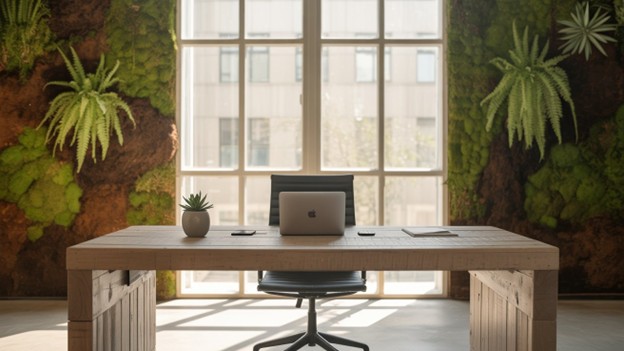
Furniture contributes to both the aesthetic and environmental quality of a workspace.
Items of Furniture to Consider:
- Made from recycled or renewable resources
- Certified with sustainability labels
- Durable, repairable, and non-disposable
- Modular and adaptable for flexible use
Also read: Essential Ergonomic Furniture for a Comfortable and Efficient Office
7. Integration of Smart Technology
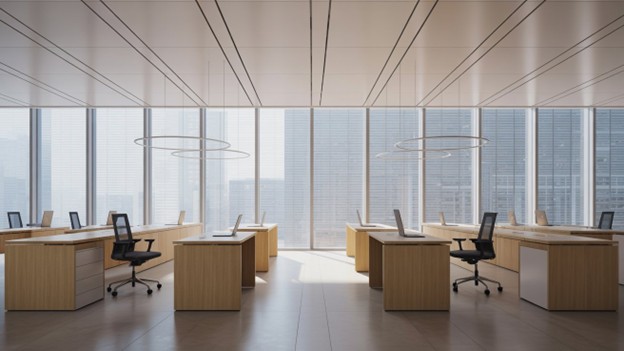
Smart technology allows for automatic monitoring and reduction of energy and resource consumption.
Examples:
- Smart lighting and smart thermostats
- Occupancy sensors
- Energy management software
- Advanced blinds and glass tinting
8. Employee Well-Being
One of the most important aspects of sustainable design is consideration of the environment and the people dwelling in it.
Wellness Design Considerations:
- Abundant natural light and ventilation
- A combination of quiet acoustic spaces and places for collaborative teamwork
- Furnishings that emphasize ergonomic benefits
- Views to greenery and access to outdoor green space
- Healthier environments make for happier and more engaged employees.
9. Sustainable Transportation
Improving transportation-related emissions is a key component of sustainable workspace design. Subsidizing low-carbon commuting supports both the environment and employee job satisfaction.
Recommended Initiatives:
- Cycling: Install bike racks and shower facilities to encourage cycling to work.
- Electric Vehicle (EV) Charging Stations: Support the shift to electric mobility by providing accessible charging points.
- Remote/Hybrid Work Options: Reduce the need for daily commuting by allowing flexible work arrangements.
- Public Transit and Carpooling Incentives: Offer rewards or subsidies for employees who use buses, trains, or participate in carpools.
Sustainable Practices in 10 Easy Steps
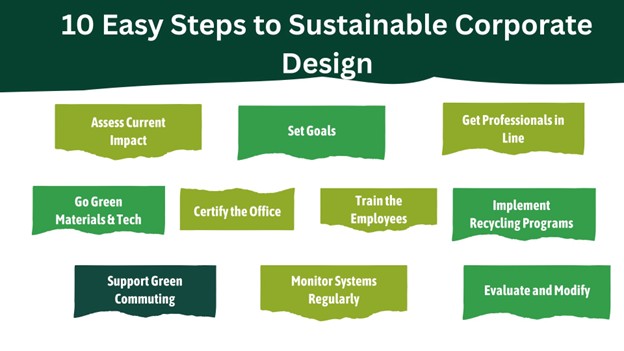
Going green in the office need not be a daunting task. It can be made simple:
- Assess Current Impact: Make an energy and sustainability assessment.
- Set Goals: Set specific, measurable targets for sustainability.
- Get Professionals in Line: Get together with like-minded designers, like Arteriors, for instance.
- Go Green Materials & Tech: Choose sustainable materials and implement smart solutions.
- Certify the Office: Get LEED, WELL, or other certifications as applicable.
- Train the Employees: Cultivate green behavior and awareness in employees.
- Implement Recycling Programs: Emphasize waste segregation and recycling.
- Support Green Commuting: Promote bikes, carpools, or remote working.
- Monitor Systems Regularly: Measure performance of the sustainable systems and technologies.
- Evaluate and Modify: Keep on reviewing and changing progress.
Final Thoughts
Sustainable workspaces are the future. As businesses strive to align with environmental standards and social responsibility, sustainable office design becomes essential to corporate success. If you’re planning to create a future-forward, eco-friendly workspace, Arteriors is your trusted partner. As a top office interior design company, Arteriors specializes in blending sustainability, aesthetics, and functionality. Our team of experts ensures every design detail contributes to a greener, healthier, and more productive workspace. Start building your sustainable office because the future of work depends on it.

Share your thoughts
No Comments