

A pleasant and attractive workplace has a beneficial effect on workers’ motivation and output. Several functional components and design aspects must be carefully considered while creating the ideal workplace environment. The most crucial of these is selecting the appropriate flooring material. Flooring has a significant impact on the workspace’s usability as well as appearance. Commercial flooring lays the groundwork for a welcoming and productive space by offering comfort, durability, and a feeling of professionalism and design. As the owner of a business, it is crucial to choose the best commercial flooring option for your particular location. Knowing more about the flooring options can help you decide which one could be best for your business. Let’s get started and discover the top choices for commercial flooring.
Hardwood Flooring
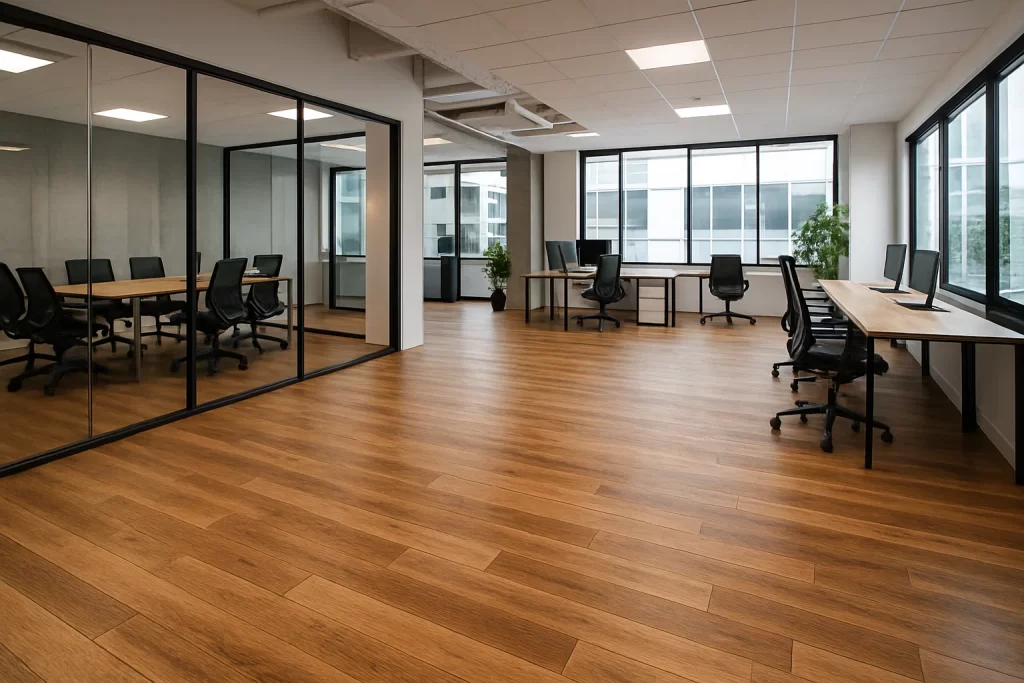
- One of the few flooring options that is derived from natural resources.
- Available in strips, planks, and parquet patterns.
- Sturdy, comes in a variety of hues to match interior design.
- Two basic types:
Solid hardwood flooring – a single piece of solid wood used to mill the boards.
Engineered hardwood flooring – composed of actual hardwood and a multi-layer foundation composed of compressed wood, resin, and polymers.
Pros
- Compared to other floors, they have a longer lifespan.
- Striking surface design that complements any type of area.
- Variety of hardwood flooring options are available, including red oak and eco-friendly wood fibres.
Cons
- Very expensive.
- More vulnerable to cupping, leaks, and fractures.
- Prone to leaks and dampness, which over time erodes the surface.
- Might occasionally make noises, creaks, and squeaks due to wear and tear.
Laminate Flooring
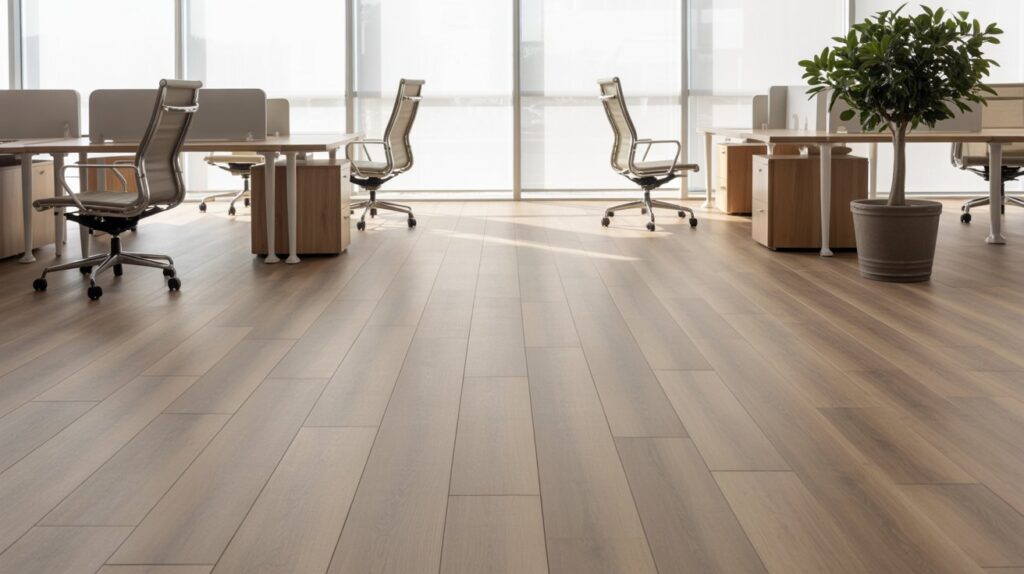
- Several synthetic material layers that are laminated together to form a single unit.
- Does not require direct nails or glueing to the floor; instead, a thin layer of foam cushioning is placed underneath it.
Pros
- Available in a variety of fashionable and reasonably priced types.
- Delivers more consistent textures and tones than real hardwood.
- Ideal for daily usage and soft underfoot.
- Simple to keep clean.
Cons
- Produces a hollow sound when positioned on an uneven flooring.
- Water-resistant laminates should be maintained dry since they can only withstand a specific amount of excessive moisture.
Vinyl Flooring
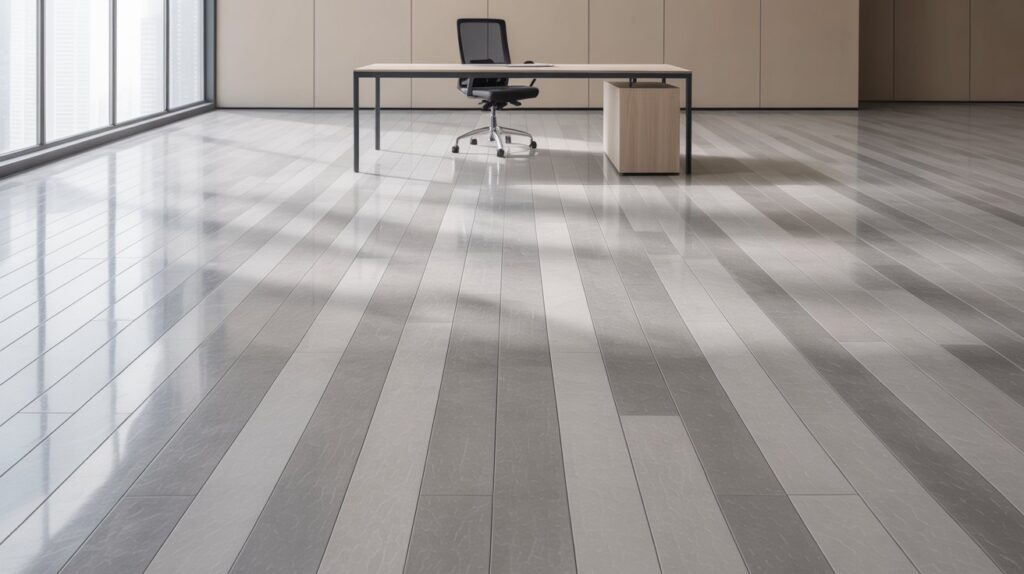
- Completely synthetic polymer that may mimic stone or hardwood without requiring maintenance.
- Offices, schools, hospitals, and hotel lobbies may have luxury vinyl tile (LVT), vinyl sheet flooring, or vinyl composition tile (VCT).
Pros
- Available in a range of designs and colours and is quite long-lasting.
- Less expensive than a number of various flooring materials.
Cons
- May get damaged or punctured.
- May fade with time, especially in places that receive a lot of UV light.
- Due to adhesive, removing tiles can become costly and challenging.
- Greater environmental effect than certain flooring solutions since volatile chemicals are emitted during processing.
Tile Flooring
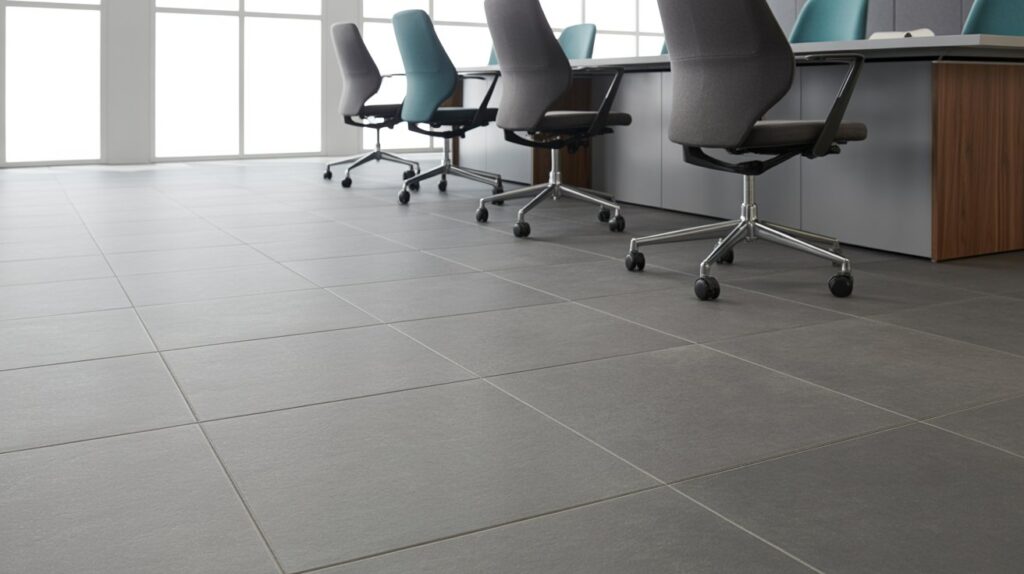
- One of the most widely used flooring options because of its excellent durability and attractive appearance.
- Wide variety of tiles available, ranging from ceramic to porcelain.
Pros
- Easy to sanitise floor tiles because of their non-porous construction.
- Not as expensive as real stone
Cons
- May not be the most suitable for physical workstations due to their smooth, slick feel and stiffness.
- Installation can be difficult and time-consuming.
Stone Flooring
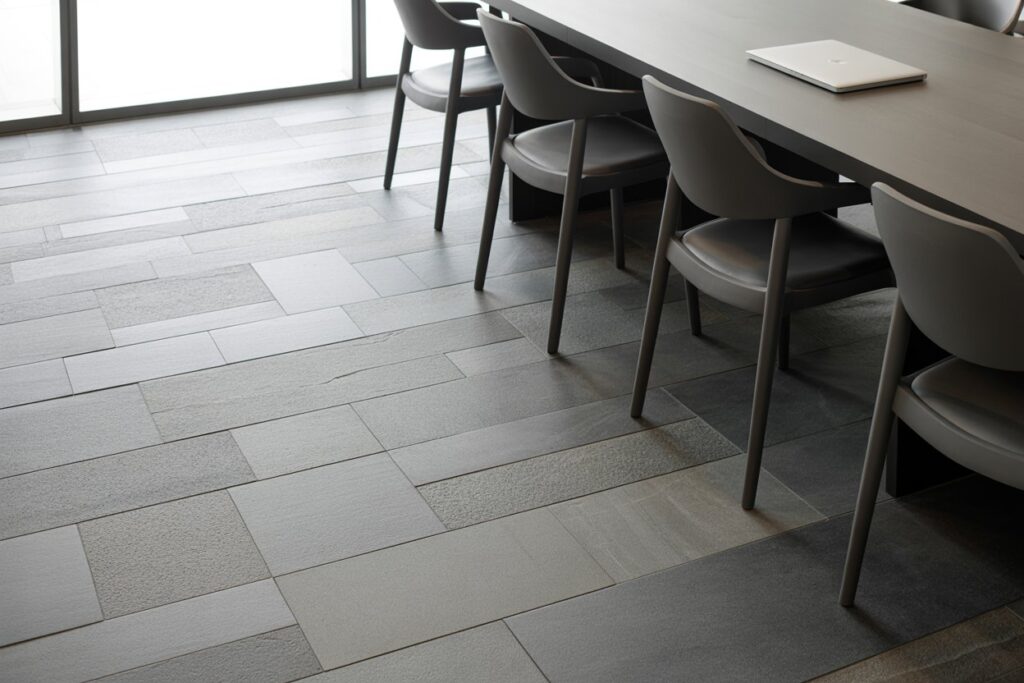
- Carved straight from blocks of stone.
- Stones include sandstone, granite, marble, and limestone, formed from minerals that are found in mountains.
- Granite is the most commonly used stone for flooring.
Pros
- Visually appealing and gives a rich and natural appearance.
- Highly resilient.
Cons
- Improper sealing might leave it vulnerable to water damage and discolouration.
- Cold and hard to walk on.
- Requires expert installation.
- Slippery when wet.
Rubber Flooring
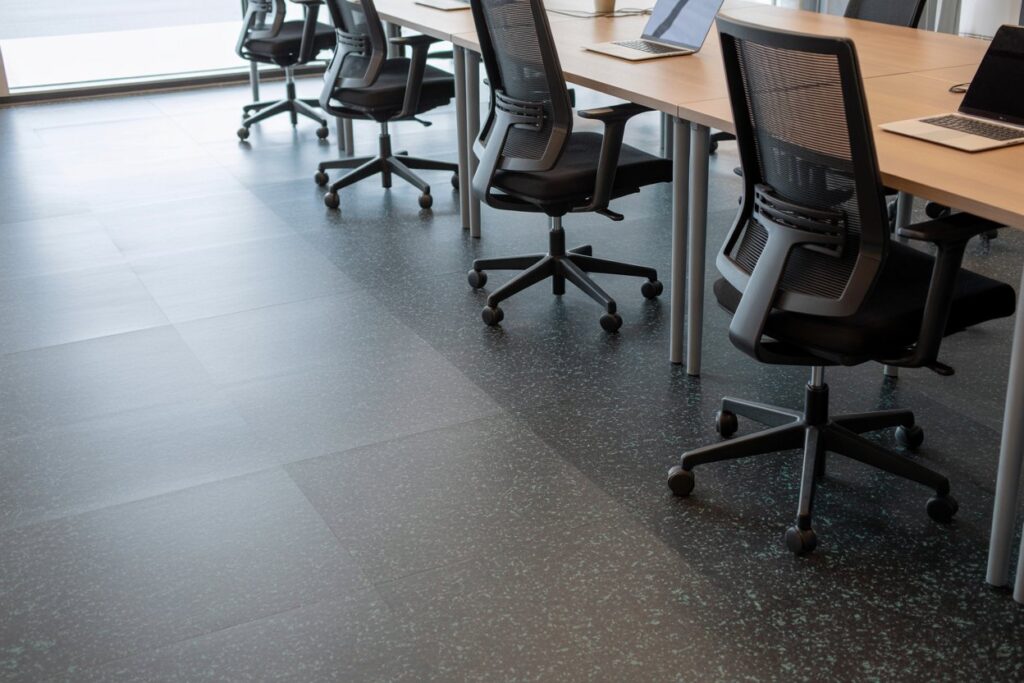
- Composed of synthetic or natural materials, such as recycled rubber tyres.
- Because of its elasticity or “bounce,” it is classed as a form of resilient flooring making it appropriate for places with lots of foot activity, such as dance floors, restaurants, and other places where slippage and foot fatigue might happen.
Pros
- Slip resistant as well as features a textured or patterned surface for further grip.
- Its flexibility also helps absorb shock by creating a cushioning effect.
Cons
More costly
Initially could produce rubber odour.
Carpet Flooring
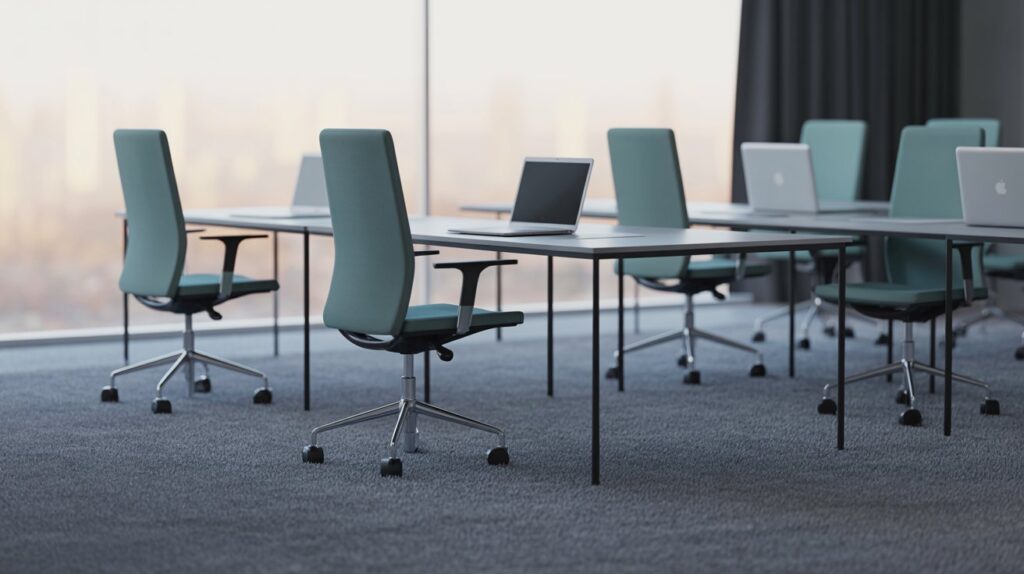
- A distinct type of carpeting designed to endure higher foot activity, pressure, and wear & tear.
- A low pile carpet that has a tighter looping pattern, which also increases its stain resistance.
Pros
Makes a room seem cosier both visually and physically.
Simple to clean.
Cons
- More prone to discolouration.
- Allergens may become lodged in the fibres.
Bamboo Flooring
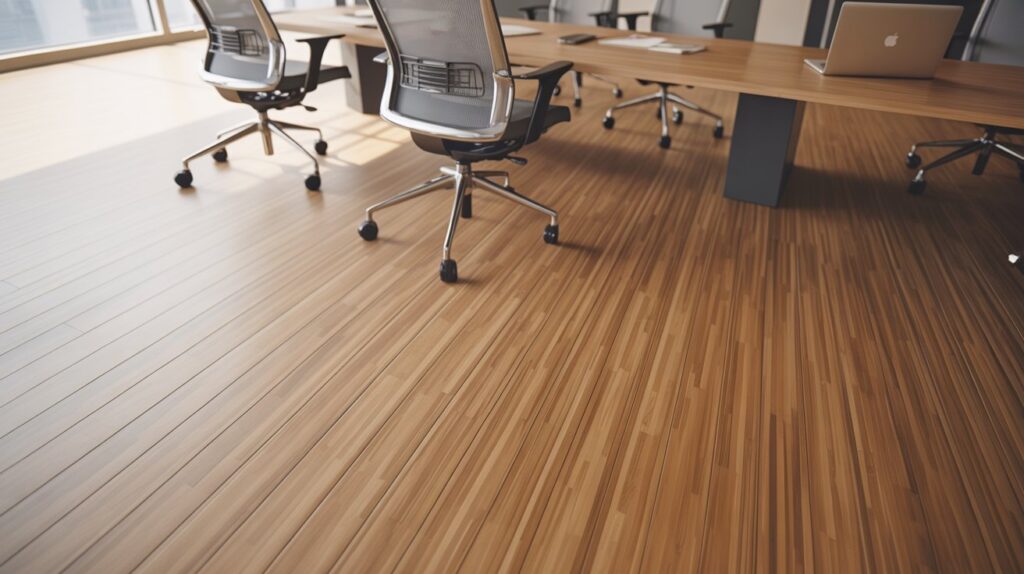
- Bamboo is a naturally occurring material that may be used to create flooring that looks like hardwood.
- Easy to maintain because it resists stains and water.
Pros
- Environmentally friendly and renewable
- Resilient, particularly strand-woven.
Cons
Scratches may be an issue.
May expand in humid weather.
Concrete Flooring
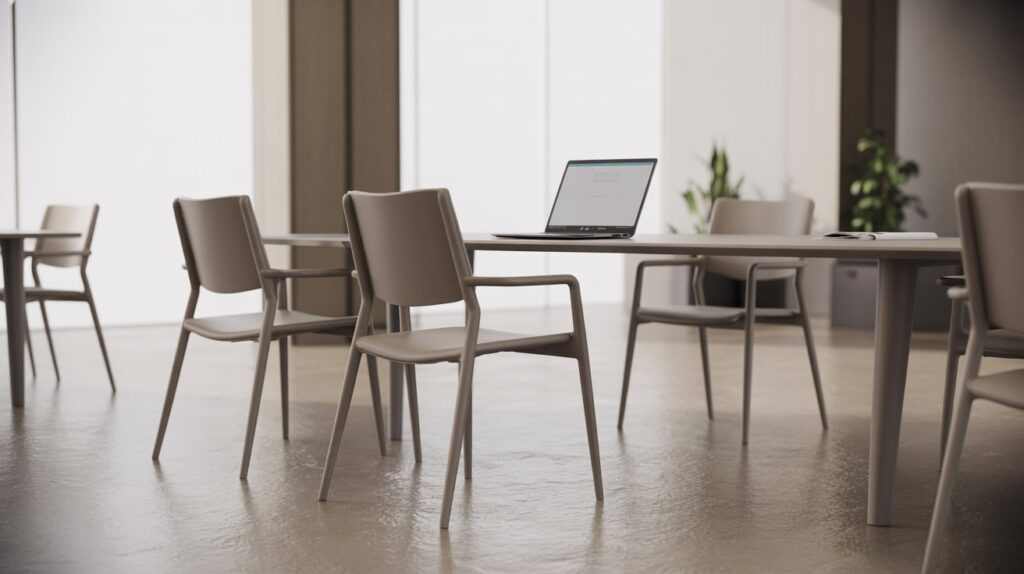
- Strongest flooring material.
- Because it can tolerate heavy machinery and continuous foot traffic, it is perfect for commercial restaurant environments, particularly in kitchens.
Pros
- It is quite resilient.
- Spills, dust, filth, and stains are easily cleaned off.
Cons
- May not match the visual style of your room and can be noisy and uncomfortable to stand on for extended periods of time.
Read more: Upcoming Interior Design Trends for the Office Space
Conclusion
With so many options available, selecting the best commercial flooring may be difficult. Determine the essential elements you desire, such as style, durability, and maintenance needs, to make the process easier. This will assist in reducing your options and guarantee that the flooring you choose satisfies the requirements of your room. After deciding on the sort of commercial flooring that best suits your needs, it’s important to pick a trustworthy commercial interior designing firm for laying your new flooring.
If you’re planning a commercial or office interior project and need expert guidance in selecting the right flooring and overall design, Arteriors can help. As a trusted office interior design company in Kerala, Arteriors offers tailored solutions that combine aesthetics with practical performance, ensuring your workspace is both stylish and efficient. We take great pleasure in offering comprehensive interior fit-out services. We are a renowned turnkey interior designer in Kerala that aims for excellence to ensure that your flooring is both durable and visually beautiful.

Share your thoughts
No Comments