

Modern office design involves more than simply aesthetics; comfort, productivity, and functionality are also important considerations. Soundproofing is an important yet often overlooked aspect of office design. Effective acoustics optimisation is essential to any successful design as a well-designed office should promote cooperation, well-being, and productivity. Let’s examine the importance of acoustics in office design and how they might change your workspace.
Understanding the Impact of Noise Pollution
Excessive noise impairs employees’ cognitive function and causes stress and exhaustion. Employees who are subjected to continuous noise are more likely to suffer from burnout and have reduced work satisfaction, which can have an adverse effect on their physical and emotional well-being.
Quick and Effective Hacks to Reduce Noise in the Office
Office noise puts people under stress and affects their productivity. When an office activity demands complete focus, noise can interfere with productivity, impair performance, and even cause long-term health problems. Background noise reduces the comprehension of conversations, making communication exhausting and prone to errors. To guarantee a high-quality and effective working environment for employees, the workplace must have good acoustics and noise management. Here are simple yet effective strategies that combine functionality with aesthetics.
1. Optimize Space Planning for Quieter Work Areas
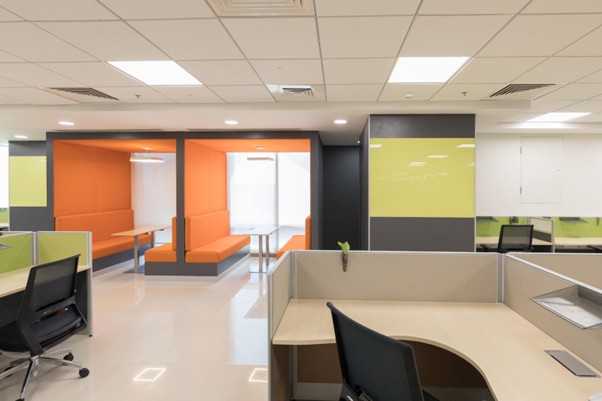
- Organise your workspace by dividing it into zones for mild interaction and conversation, and loud and chaotic activity.
- If your conference room is in the middle of the workplace, relocate it to a corner and install some panels that will absorb noise.
- If your staff members frequently have to talk about their job at each other’s desks, which is annoying to adjacent employees, think about setting up a common gathering space elsewhere in the office.
- Place printers, coffee machines, and high-traffic areas away from quiet zones.
- Cluster teams based on their work style—creative/collaborative groups in one area, focus-driven teams in another.
- Position meeting rooms at the edges of the office instead of central spaces.
2. Embracing Spatial Dividers
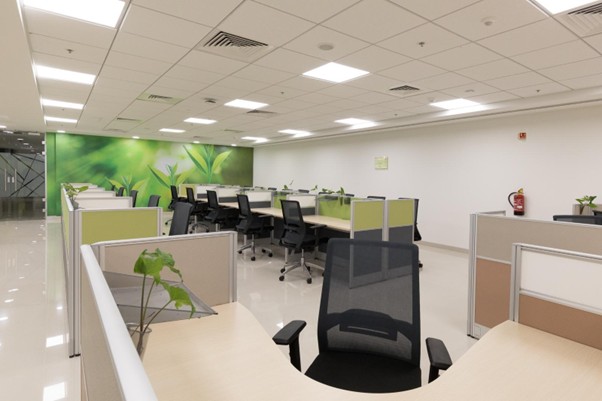
- Cubicles and wall partitions are a tried-and-true method that has helped businesses of all sizes divide staff and reduce noise in the workplace.
- Office divider installation increases privacy for everyone and reduces noise levels in the workspace, allowing employees to concentrate better.
- These barriers may also be used to create temporary quiet spaces where employees can concentrate on an essential task or meeting spaces where groups can talk without interruption.
3. Enhance Partitions with Acoustic Materials
- By incorporating acoustic materials into partitions, a methodical way to manage sound dynamics in a room is introduced.
- Sound waves are efficiently absorbed and muted by incorporating these speciality materials into dividers, stopping them from spreading to other locations.
- As a consequence, the atmosphere is calmer and more suited for concentrated work and teamwork.
Read more: The Importance of Acoustics in Office Design: Minimizing Noise and Boosting Privacy
4. Improve Acoustics with Wall and Ceiling Panels
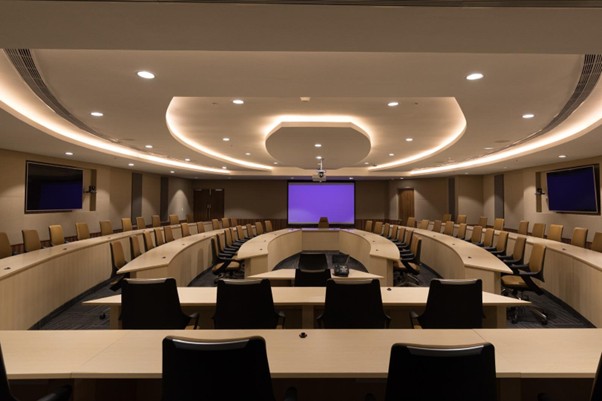
- Office noise levels can be reduced with the use of acoustic office dividers that are made from sound-absorbing materials like cloth, foam, or specialist acoustic panels.
- They reduce the amount of sound energy that bounces off hard surfaces and spreads around the office.
- They also serve as barriers, keeping noise from passing through and affecting areas nearby.
5. Choose Flooring That Absorbs Sound
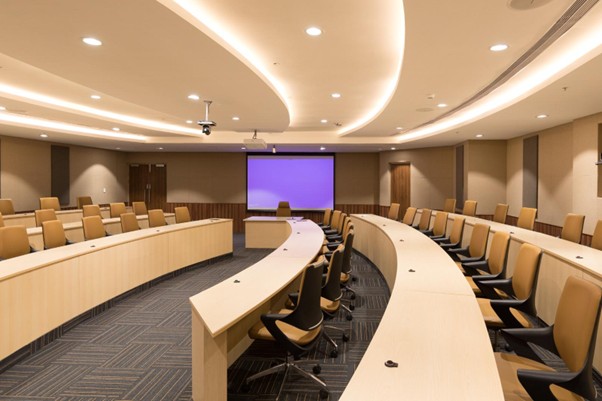
- Soft flooring alternatives, like cork or carpet tiles, provide superior sound-absorbing qualities and reduce impact noise from machinery and foot activity.
- Because soft flooring traps and dampens sound waves and absorbs undesired noises, it can assist reduce reverberation.
- This reduces echoes and produces clearer speech, which facilitates communication and focus for employees.
Learn more about: Different Types of Flooring Materials Used in Commercial Spaces
6. Implementing Acoustic Sound-Absorbing Materials In The Ceiling
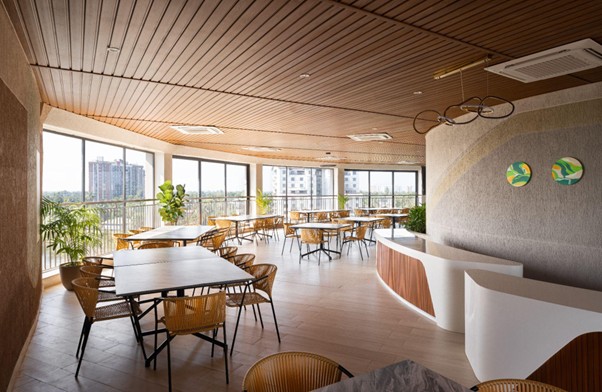
- Noise transmission between rooms can be significantly reduced by installing soundproofing materials in the walls and ceilings, such as foam or specialised panels.
- These materials are perfect for meeting rooms, private offices, or any other setting where concentration and secrecy are crucial since they suppress sound waves.
7. Improve Noise Control with Better Door Detailing
- Windows and door gaps are frequent sources of noise leaks. Sealing window frames and installing door sweeps at the bottom of doors can help close these gaps.
- By significantly reducing noise intrusion and escape, these workplace soundproofing materials help to preserve a peaceful environment.
- In certain places, adding upholstered panels or foam padding to doors and walls improves noise insulation. These materials aid in sound management by absorbing sound and preventing the transmission of noise.
8. Create Dedicated Collaborative Zones
- Establishing designated quiet areas is an effective method to reduce noise while providing employees with a place to concentrate and work efficiently. Quiet zones range from completely enclosed rooms to places within the main office space that are clearly marked off.
- Enclosed spaces work especially well because they provide a peaceful atmosphere by isolating outside sounds. For open areas, think about creating peaceful niches using noise-dampening separators, soft furniture, or acoustic panels.
- Giving workers spaces for concentrated work communicates a powerful message about the importance of their time and mental resources. Quiet areas improve employee wellbeing in addition to productivity since they minimise stress and foster a peaceful atmosphere.
9. Use Indoor Plants as Natural Sound Absorbers
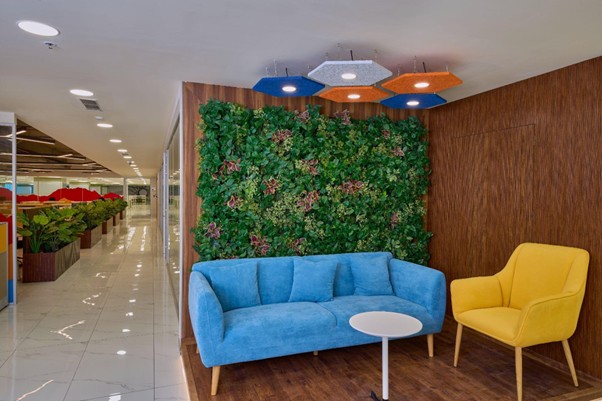
- Plants enhance the working atmosphere and absorb background noise.
- In addition to improving the air quality, placing big, leafy plants throughout the office also helps reduce noise levels. To reduce noise and provide greenery, place them thoughtfully in open spaces, close to loud machinery, or in reception areas.
- Because they are better at absorbing interior noise, pick plants with thick, fleshy leaves and rough bark.
- It should be noted that a number of plants in smaller pots scattered around the space would probably minimise noise more effectively than a single huge plant arrangement.
10. Install Acoustic Pods for Dedicated Quiet Spaces
Soundproof pods are becoming a popular feature in modern office design. They:
- Provide employees with private, noise-free areas for calls or deep work.
- Serve as mini meeting rooms without needing permanent construction.
- Add flexibility to open-plan layouts.
11. Choose Noise-Reducing Furniture
Modern office furniture is often designed with sound control in mind. Examples include:
- Acoustic booths or pod chairs for private conversations.
- Workstations with upholstered panels.
- Collaborative furniture that absorbs sound instead of reflecting it.
- Rugs and carpets to dampen footstep noise.
- Upholstered furniture for lounges or meeting spaces.
- Curtains or fabric wall hangings to minimize echo.
Conclusion
Office noise frequently seems like an unavoidable aspect of contemporary work life, particularly in dynamic settings where teamwork is encouraged. Reducing noise pollution is critical in a time when efficient teamwork and laser-like focus are essential for workplace efficiency. A professional office interior design firm like Arteriors can help you integrate strategic office design solutions to create a work atmosphere that encourages creativity, productivity, and satisfaction among employees.
With a wealth of expertise designing modern office interiors, Arteriors is among the top office interior designers in Kerala. Our main focus is on offering custom office interior design solutions that complement your company’s objectives and brand identity. We consider acoustic design to be just as important as any other element of workplace design.

Share your thoughts
No Comments